

If you’re here, you’re probably either using Shopify and starting to run into its limits, or you’re evaluating the best platform to support long-term growth. Shopify is a great starting point for many businesses – fast, reliable, and easy to set up. But enterprise-level businesses often find that Shopify’s feature set doesn’t align with their complex operational needs.
Complex catalogs, international expansion, or custom workflows often prompt merchants to upgrade to higher-tier plans, such as Shopify Advanced or Shopify Plus, which come with significant cost increases. Customizing your checkout? Need multiple storefronts? Those features live behind a paywall.
Although Shopify’s infrastructure handles traffic well, performance can still be affected by app overload and similar issues. And while the platform offers thousands of apps, this reliance can create technical debt and unpredictable monthly costs. On top of that, if you’re not using Shopify Payments, you’ll pay extra transaction fees, which can add up fast for high-volume stores.
If you’re ready for more flexibility and fewer limits, there are powerful Shopify alternatives designed to meet your needs. Let’s look at other options that offer deeper control, better built-in features, and more transparent pricing. We’ll compare the top options and explain why we believe WooCommerce with a managed hosting partner offers the most flexibility, control, and features for businesses!
Why are merchants moving away from Shopify?
Shopify is a popular eCommerce platform that works well for many businesses starting out. It’s fast, easy to use, and packed with essential features for growing stores. However, as needs become more complex, they often encounter limitations within Shopify’s closed ecosystem.
API rate limits
For most Shopify stores, API rate limits don’t pose a significant issue, as they mainly impact third-party apps and backend integrations that handle frequent or high-volume requests. However, during flash sales or seasonal spikes, these limits can cause challenges, particularly for stores with complex automations or multiple connected tools.
Shopify Plus raises these limits, providing more flexibility for high-traffic stores, reducing the need for constant workarounds.
It’s important to note that API rate limits only affect apps and integrations, not storefront speed or checkout performance.
Transaction fees
Shopify’s transaction fees can quickly add up, particularly if you use third-party payment gateways like Stripe or PayPal instead of Shopify Payments. In these cases, Shopify imposes an additional fee on top of the standard gateway charges.
For example, with Shopify Basic, if your payment processor charges 3.1% + $0.29 per transaction, Shopify adds a 2% platform fee, resulting in a total of 5.1% + $0.29.
Custom development needs
As your store grows, you’ll likely need more customization to support complex operations, manage inventory, or add specialized features.
While Shopify’s Liquid templating language allows for frontend theming, the platform’s closed ecosystem restricts access to server-side code or databases, so advanced customizations typically require its APIs or third-party apps. This adds complexity and can drive up monthly costs.
International expansion limits
Shopify supports multi-currency and multi-language selling through its Shopify Markets feature, but this support is quite limited unless you’re using Shopify Payments. Even with Shopify Markets, full international features like localized domains, custom pricing, and language switching often require additional apps or higher-tier plans.
This adds both cost and complexity, especially for businesses selling in regions where Shopify Payments isn’t available.
Performance optimization challenges
Shopify’s infrastructure powers thousands of stores, including major brands, and handles high-traffic events like flash sales and product drops. Shopify manages load balancing, global CDN distribution, and automatic scaling behind the scenes.
However, performance issues often come up not from Shopify’s infrastructure, but from app-heavy setups, unoptimized themes, or excessive client-side scripts. Since merchants can’t access the server environment directly, optimization is limited to theme code and content-level adjustments.
Compare how a platform like WooCommerce handles this, for example. WooCommerce gives you full control over performance. You choose your hosting provider, configure your server environment, and implement caching or CDN strategies. While this provides deeper optimization possibilities, it also means performance is your responsibility (unless you work with a managed host that handles these configurations for you, which is what we recommend). With the right setup and ongoing maintenance, a well-optimized WooCommerce store can outperform Shopify in speed and responsiveness.
App and integration costs
Both Shopify and WooCommerce follow similar models for extending functionality – many features that store owners consider essential aren’t included in the core platform and require third-party apps or extensions.
Shopify apps typically charge monthly subscription fees, while WooCommerce extensions often use annual licensing. In both cases, costs can add up quickly as your store scales. Features like advanced product filtering, automated email marketing, multi-currency support, or sophisticated shipping calculations often require paid add-ons on either platform.
The key difference lies in ownership. When you purchase a WooCommerce extension, you receive the actual code due to WordPress’s open-source nature. This means you can modify extensions, continue using older versions if needed, or even develop custom solutions based on existing code. With Shopify apps, you’re subscribing to a service – if you stop paying or the app developer discontinues support, you lose access to that functionality entirely.
Limited content management
Shopify’s content management capabilities are relatively basic, which may not be enough for stores with content-heavy strategies. While it supports blogging and simple pages, it lacks the flexibility needed for managing larger media libraries or running complex blogs. For businesses looking to build rich content hubs or run intricate content strategies, Shopify may feel limiting in comparison to platforms with stronger content management systems.
Multi-store management
Shopify’s standard plans allow only one store per account, and even with Shopify Plus, managing multiple storefronts can be cumbersome. Each expansion store still requires an independent setup and management, which adds administrative complexity. For businesses operating multiple stores in different regions, languages, or brands, this can become an inefficient solution.
Why moving to closed platform alternatives will never be the right move
Platforms like Shopify, Wix, and Squarespace are great for getting started, but as your business grows, their closed nature can become a significant constraint. These platforms impose structural and technical limits that restrict flexibility in the long term:
- Platform-imposed ceilings: Even on enterprise plans, closed platforms often enforce hard caps on API calls, product variants, staff accounts, and checkout customization. These limitations become barriers as your operations become more complex.
- Platform-specific development: Closed ecosystems require specialized developers who are familiar with the platform’s limitations, which drives up costs and narrows the talent pool. Unlike open-source platforms, you’re restricted to what the system allows.
- Proprietary architecture and data lock-in: Migrating off a closed platform can be difficult and costly. These platforms use proprietary data structures, making re-platforming far more complex than open-source options like WooCommerce or Magento.
- Limited control over core functionality: Whether on a basic or enterprise plan, you can’t modify the platform’s underlying architecture. This means you’re unable to rewrite workflows, restructure the backend, or build custom features tailored to your business needs.
- Limited integrations: Closed platforms restrict third-party integrations to approved apps and partners. If your business relies on custom tools, external systems, or industry-specific software, you may face workarounds – or no options at all.
Closed platforms like Shopify are great for getting started, but as your business grows, they can impose limitations. With an open platform like WooCommerce, you gain more flexibility, complete control over your infrastructure, and the ability to customize your store to meet your unique needs – without being restricted by the platform’s built-in boundaries.
– Scott Stapley, Co-Founder and CEO at BigScoots
Top Shopify alternatives for scaling eCommerce businesses
As your business expands, choosing a platform that can keep up with your growing needs is essential. Below, we explore top Shopify alternatives designed to support complex catalogs, high-volume traffic, global logistics, and advanced workflows.
Whether you’re managing 10,000+ SKUs, dealing with seasonal demand spikes, or overseeing multiple warehouses and sales channels, these platforms provide the flexibility and control necessary for sustainable growth.
WooCommerce
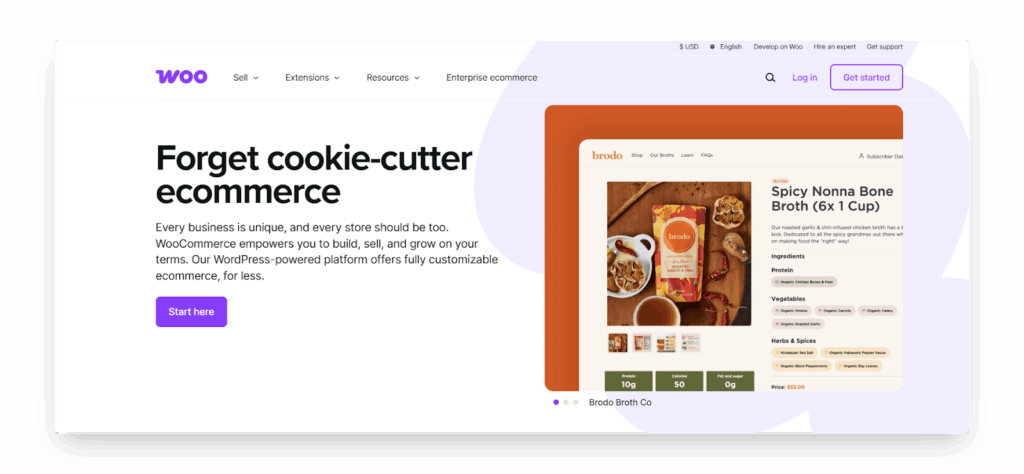
WooCommerce is the leading eCommerce plugin for WordPress, offering unmatched flexibility and deep customization for growing businesses. While both WordPress and WooCommerce are free to use, you’ll need to factor in hosting and development costs. This investment comes with complete ownership over your platform, making WooCommerce ideal for businesses that want more control and flexibility without platform-imposed limitations.
One of WooCommerce’s biggest advantages is its hosting flexibility. Unlike Shopify’s all-in-one hosted model, WooCommerce lets you choose your hosting provider and tailor the infrastructure to your needs. This flexibility allows you to optimize performance, manage costs, and customize the platform to suit your business, whether you’re preparing for flash sales, managing multiple storefronts, or operating globally.
WooCommerce comes with no platform-imposed caps and no transaction fees – you only pay standard payment gateway rates. This makes it a more cost-efficient choice, particularly for high-volume stores. Shopify, in contrast, charges additional fees for third-party payment processors, which can add up quickly.
The WooCommerce ecosystem is also rich with free and premium extensions to support growth. From ERP and warehouse integrations to marketing automation and advanced inventory tools, you can customize your store’s functionality as needed. With the right plugins or custom development, you can manage multi-warehouse setups, custom pricing models, and complex fulfillment workflows.
When it comes to design and development flexibility, WooCommerce excels. Built on open-source WordPress, WooCommerce allows developers full access to both frontend and backend code, giving them the freedom to create completely bespoke themes and functionalities. You’re not limited by templating languages or rigid checkout flows – your store can function and look exactly as you want it to.
North Commerce
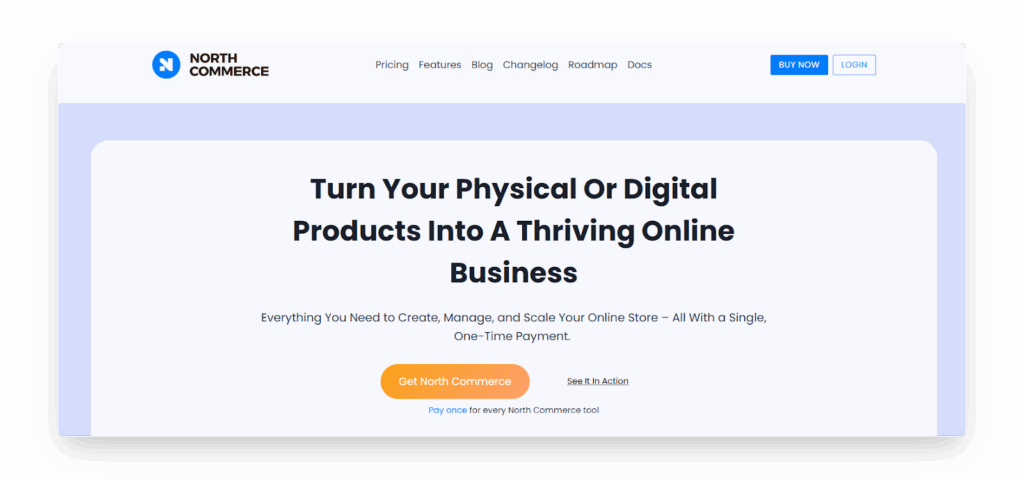
For merchants looking for a WordPress-based alternative to WooCommerce with less complexity and more built-in functionality, NorthCommerce is a strong contender. Designed for high-volume stores processing 1,000+ orders per day, it prioritizes speed, simplicity, and scalability without the need for multiple plugins or ongoing subscription fees.
Unlike WooCommerce, which often relies on third-party extensions, NorthCommerce includes many advanced features out of the box, such as real-time inventory syncing across multiple warehouses, automated order routing, and single-page checkout funnels. These built-in features help businesses streamline operations without constantly layering on additional tools.
One of NorthCommerce’s standout benefits is its one-time pricing model. Instead of recurring monthly subscriptions or transaction-based fees, merchants pay a flat, lifetime price with no added transaction fees, even at scale. This makes it an attractive option for stores looking to reduce long-term costs and maintain pricing predictability.
NorthCommerce also offers hosting flexibility, allowing developers to choose the infrastructure that best fits their needs. Whether you’re using shared hosting, VPS, or a managed cloud provider, you maintain full control over performance, caching, and server resources.
While its third-party integration ecosystem isn’t as extensive as WooCommerce’s, NorthCommerce supports major payment gateways like Stripe, PayPal, and Mollie, as well as webhooks, REST API support, and integrations with tools like Zapier and Pabbly. Many essential eCommerce functions are handled natively, reducing the need for plugins and simplifying setup.
With built-in features for shipping, tax automation, and custom sales funnels, NorthCommerce provides a streamlined platform for merchants who want power and scale without the complexity of managing multiple plugins or dealing with recurring costs.
BigCommerce
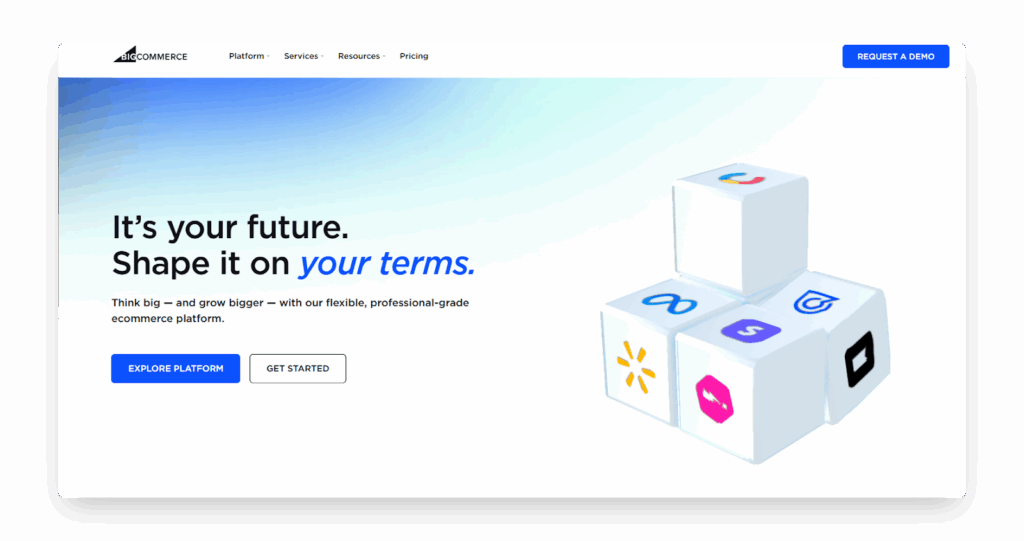
BigCommerce is a powerful Shopify alternative, offering more flexibility at the enterprise level. While its pricing is similar to Shopify’s on lower tiers, its custom enterprise plans include advanced features with no platform transaction fees, making it a cost-effective choice for growing businesses.
Unlike Shopify, BigCommerce supports unlimited API calls and up to 400+ requests per second, making it ideal for high-traffic stores with complex integrations. It also supports headless builds, giving developers full control over the frontend using frameworks like React or Next.js.
For B2B sellers, BigCommerce provides built-in tools like custom price lists, account-specific catalogs, and quote management, eliminating the need for third-party add-ons. It also manages large catalogs and multi-storefront setups without performance issues, thanks to its server-side rendering and global CDN.
BigCommerce is an excellent choice for businesses that need enterprise-level performance and flexibility without being locked into a rigid ecosystem.
Adobe Commerce Pro (Formerly Magento)
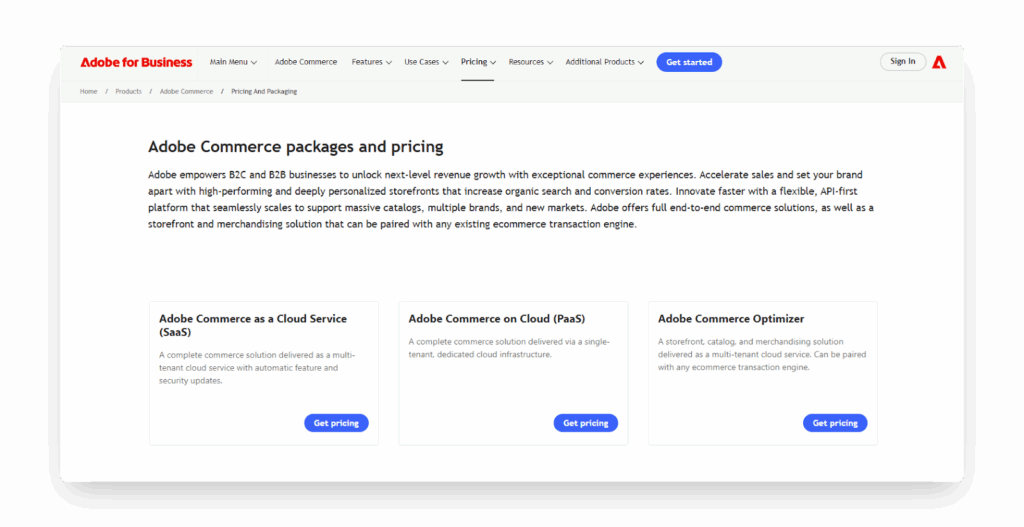
Adobe Commerce Pro is a high-performance eCommerce platform designed for scalability. Capable of handling millions of SKUs and up to 200,000 orders per hour, it’s a top choice for enterprise retailers with complex catalogs and high-traffic demands.
It’s ideal for businesses that need custom workflows, deep integrations, and advanced product configurations. Adobe Commerce offers unmatched flexibility for technical teams building bespoke solutions.
However, a few important considerations:
- Hosting: Adobe Commerce Pro runs on AWS. While reliable, it’s a rented environment, not fully owned or optimized by Adobe, which may limit performance tuning compared to hosts like BigScoots with purpose-built infrastructure.
- Managed services: Adobe doesn’t include managed services by default. Businesses that need dedicated support or custom server configurations will face additional costs, which can climb quickly for hands-on environments.
Adobe Commerce is best suited for businesses with in-house technical resources or agency support, those looking for maximum power, even if it comes with complexity and higher infrastructure overhead.
Why a WordPress store with managed hosting is the best choice
Pairing WordPress with an eCommerce plugin like WooCommerce or NorthCommerce offers growing businesses unmatched flexibility. Unlike closed platforms like Shopify, WordPress lets you fully control every aspect of your store, from product presentation to checkout experience, so your site can evolve with your business. With WooCommerce in particular, you gain access to a vast ecosystem of extensions and customization options, making it ideal for businesses that need full control over their platform.
However, flexibility alone isn’t enough; performance, security, and reliability are equally important. That’s why you need managed hosting.
Choosing a high-quality managed WordPress host ensures your store is backed by robust infrastructure, optimized for speed, and monitored around the clock. WordPress gives you the power to select a host tailored to your needs – whether that’s optimizing for international traffic, custom development, or handling peak-season sales.
BigScoots is a great choice for scalable WooCommerce hosting. Our Managed Hosting for WordPress plans support up to 1.5 million monthly visitors, offer unlimited bandwidth, and include Cloudflare CDN integration for fast, reliable global performance. For even more demanding stores, BigScoots provides custom enterprise-grade architecture, tailored to your traffic, caching, and backend needs.
What truly sets BigScoots apart is infrastructure ownership. While most hosts rent space on AWS or Google Cloud, BigScoots owns and operates its hardware in a Tier III+ data center. This gives us direct control over performance tuning and removes the resource constraints often found with cloud resellers. This means no surprise upgrades and no arbitrary limits – just infrastructure designed to grow with you.
Add to that our proactive monitoring, hands-on support, and a transparent pricing model with no extra charges for performance tuning or troubleshooting, and BigScoots becomes more than just a host – we’re a long-term partner in your growth.
For businesses scaling their eCommerce operations, the combination of WordPress, WooCommerce, and a managed host like BigScoots offers performance, flexibility, and freedom that closed platforms simply can’t match.
Move away from Shopify and let your store grow
Shopify is a popular starting point, but it can become a limiting platform. As traffic increases and operations become more complex, Shopify’s infrastructure, transaction fees, and reliance on third-party apps can slow you down or drive up costs.
That’s why many merchants turn to WordPress paired with managed hosting – a setup that offers true flexibility, customization, and performance at scale. When it comes to managed hosting for WordPress, BigScoots is built for growth.
Take Valentte, a UK-based skincare brand. After outgrowing their original WordPress setup on Kinsta, they thought about migrating to Shopify, but the limitations were clear. Instead, they partnered with BigScoots and moved to a custom Enterprise Hosting for WordPress plan. This resulted in faster performance, no crashes, and the freedom to scale on their terms!
BigScoots offers free migrations, including from Shopify, with zero downtime and hands-on support throughout the process. If you’re ready to move beyond platform limits and into long-term growth, we’re ready to help.